Work Smarter, Not Harder: Why Preaching 'Hard Work' Backfires
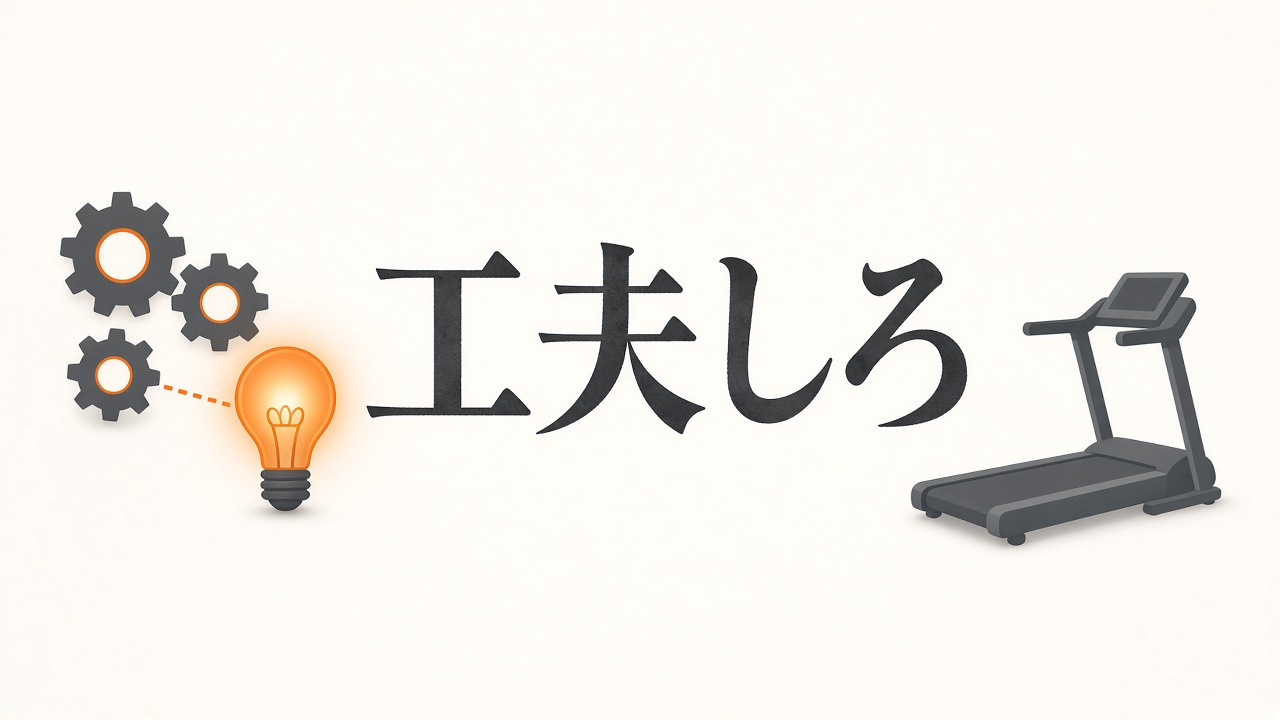
Work Smarter, Not Harder: Why Preaching 'Hard Work' Backfires
⏱️ Reading time: approx. 8 min
Table of Contents
- Introduction
- Why Forcing 'Hard Work' on Others Backfires
- The Ascetic Illusion of the 'Hard Work Cult'
- Survivor Bias and Self-Justification
- Laborers vs. System Owners
- Stop Grinding Your Body: Collect Overpowered Gear (Money Trees)
- Conclusion
1. Introduction
Who This Is For
- Anyone who has ever felt pure rage upon being told, "You're just not working hard enough!"
- Anyone exhausted by the zealots of the "effort gospel" preaching that sheer hustle guarantees success.
Who This Is Not For
- Those who have genuinely out-worked everyone else and conquered the world through sheer manual grit (you are remarkable; keep sprinting).
Let's be completely candid:
I despise the cult of mindless 'hard work.'
2. Why Forcing 'Hard Work' on Others Backfires
Imagine a teacher looking down at a struggling student and declaring, "You just didn't work hard enough!" Does that student genuinely think, "You're right, let me try harder"? Absolutely not.
The natural human reaction is defiance: "Who are you to judge? You have no idea what effort I actually poured in." Or perhaps they didn't exert themselves because they saw through the pointlessness of the task, thinking, "Stop lecturing me from your moral high horse."
Telling someone to "work harder" is linguistic violence that completely ignores their unique process, context, and values.
Behind that sanctimonious advice lurks an obnoxious subtext: Look at me—I suffered through so much effort to become important, so you must suffer too.
3. The Ascetic Illusion of the 'Hard Work Cult'
In the famous manga HUNTER×HUNTER, there is a core combat concept called "Vow and Limitation" (Covenants & Restrictions).
By imposing strict self-rules and pledging heavy consequences if broken, a user's psychic Nen power multiplies exponentially.
The devotees of the Effort Cult operate on the exact same psychological mechanism.
They impose brutal self-denial upon their lives: "To pass the elite exam, I will study 10 hours every day, banning all romance, games, anime, and recreation."
They attempt to convert pain (restriction) directly into results (returns). And because their entire identity hinges on having suffered, they physiologically cannot tolerate seeing someone else achieve the same result without undergoing equal torture.
4. Survivor Bias and Self-Justification
"They succeeded because they worked harder than anyone else!"
We hear this platitude endlessly. But it hides a massive logical fallacy: Survivor Bias.
Survivor bias is the cognitive error of focusing exclusively on the individuals who made it through a selection filter while ignoring the invisible majority who were wiped out along the way.
Put bluntly: Dead men tell no tales.
Society only listens to winners. Therefore, only winners' narratives survive. For every celebrity CEO claiming, "I succeeded because I only slept 3 hours a night," there are tens of thousands of casualties who slept 3 hours a night, destroyed their health, and vanished into obscurity. Nobody interviews them.
Furthermore, winners love to convince themselves that effort was the sole differentiator. In reality, luck, market timing, and environment account for 90% of the outcome. But when asked, "What was your secret to victory?", their retrospective memory flatters them: "I must have out-hustled everyone. Aren't I incredible?"
The causal link between raw physical effort and ultimate success is almost always a retrofitted fairytale.
5. Laborers vs. System Owners
Zealots of the Effort Cult idolize sweating for a wage. Without realizing it, they trap themselves inside the laborer's ring: selling their finite hours and physical vitality piece by piece.
What we must aspire to instead is stepping outside that arena. We want to operate on the owner's ring: generating value through external systems (code, capital, distribution, and AI).
Never compete on their battlefield. The moment you enter a contest of "who can endure more overtime" or "who can build more manual slide decks," you have already lost. That path hits an impassable ceiling.
The only arena where an individual can win indefinitely is leverage and clever system design (Kufū / 工夫).
Instead of running until your own lungs burst, design a carriage pulled by horses. While the effort zealot does squats to strengthen their legs, we go shopping for the horse.
Why emphasize this so fiercely?
Because over the coming decades, physical and routine intellectual labor will be overwhelmingly assumed by AI and robotics. Once we pass the technological threshold, what happens to someone whose sole product is their raw, unaugmented manual labor?
You must swap the operating system in your mind from laborer to capitalist right now.
6. Stop Grinding Your Body: Collect Overpowered Gear (Money Trees)
Think of it like an RPG.
The laborer spends months endlessly slashing slimes in the starting meadow just to raise their character level by 1. But grinding takes endless time, and the moment they fall asleep, zero experience points accumulate.
The system builder (capitalist) does the opposite: even at level 1, they pour their ingenuity into acquiring overpowered automated equipment (cash-generating assets).
With the right gear equipped, you don't even have to swing the sword. The system battles monsters on auto-mode while you sleep, continuously banking gold and experience.
Here is the high-leverage gear you should systematically collect:
Financial Assets (The Magic of Compounding)
Dividend stocks, bonds, broad-market index funds. These are the foundational tools for putting money to work. As Einstein noted, compound interest is humanity's greatest invention. While you rest, your capital quietly births more capital without complaining.
Real Estate (Renting Other People's Time)
Residential units, commercial spaces, parking lots. Once stabilized, physical property provides reliable monthly recurring cash flow while maintenance is delegated to third parties.
Digital Content (Digital Shadow Clones)
Blogs, digital books, video libraries, specialized educational content. Once crafted, these digital assets act as permanent 24/7 ambassadors across the internet. They carry zero inventory cost and zero replication cost.
Software Products & Micro-SaaS (24/7 Digital Robots)
Web apps, mobile utilities, automated trading scripts, Chrome extensions. A server runs your code day and night, delivering value to users worldwide and collecting revenue. Code is the ultimate scalable asset for an engineer.
AI Collaborators (The Sovereign Operator)
Deploying automated AI agents to handle content drafting, customer triage, research, and routine coding. As long as you pay negligible API usage costs, you employ tireless digital talent. We must become the conductors and owners of AI systems.
Corporate Entities (The Legal Vehicle)
A corporate vehicle is an asset container in itself. Structuring a business opens doors to capital gains, tax efficiencies, and potential exit liquidity.
7. Conclusion
"Effort" (Doryoku) is exhausting yourself.
"Cleverness" (Kufū) is setting external engines into motion.
If deep down your soul yearns to say, "I want to work less; I want an easier path," validate that desire instead of feeling guilty. That very yearning is the spark that will liberate you from the cage of wage labor and guide you toward true autonomy.
A future where AI automates routine toil is a nightmare for the pure laborer, but an absolute paradise for the system owner. Which side of that divide do you intend to stand on?
Building assets isn't instant. You might launch an app that nobody downloads. You might buy an investment that dips. If you quit at the first setback, you lose.
Failure can sting. It can feel embarrassing. I have stumbled countless times myself.
Every calculated failure is merely experience points compounding your capital longevity. Fail cheaply, learn quickly, and survive. The moment you grow just one thriving money tree on your 101st attempt, you win the game permanently.
Stop pouring raw effort into the laborer's treadmill.
Starting today, pour your ingenuity into the capitalist's architecture.
Equip the gear. Automate the machine. Own the system.
When you achieve true independence, how will you answer the question of how you won?